

Over the past several years, pricing pressures across the PCB supply chain have steadily intensified. Cost increases have been occurring across a broad range of materials and manufacturing inputs.
The industry is experiencing one of the longest sustained periods of rising material costs in recent memory. Copper-related inputs, fiberglass cloth, laminates, tooling materials, and several other components of the PCB manufacturing ecosystem have all been moving upward at the same time.
Additionally, structural demand from major technology shifts is accelerating the pressure on these supply chains. Rapid growth in artificial intelligence infrastructure, electric vehicles, advanced telecommunications, and high-performance computing is dramatically increasing demand for electronics, and the materials required to manufacture printed circuit boards.
Understanding these dynamics is important for any organization involved in designing, sourcing, or manufacturing electronics, as these underlying forces are likely to continue shaping PCB availability, pricing, and supply-chain planning for the foreseeable future.
What Is Driving PCB Material Cost Increases?
Rising Raw Material Prices
PCB laminates are made from several critical inputs including copper foil, epoxy resins, and fiberglass cloth. As costs increase for these upstream materials, laminate manufacturers often adjust pricing to reflect the higher production costs. 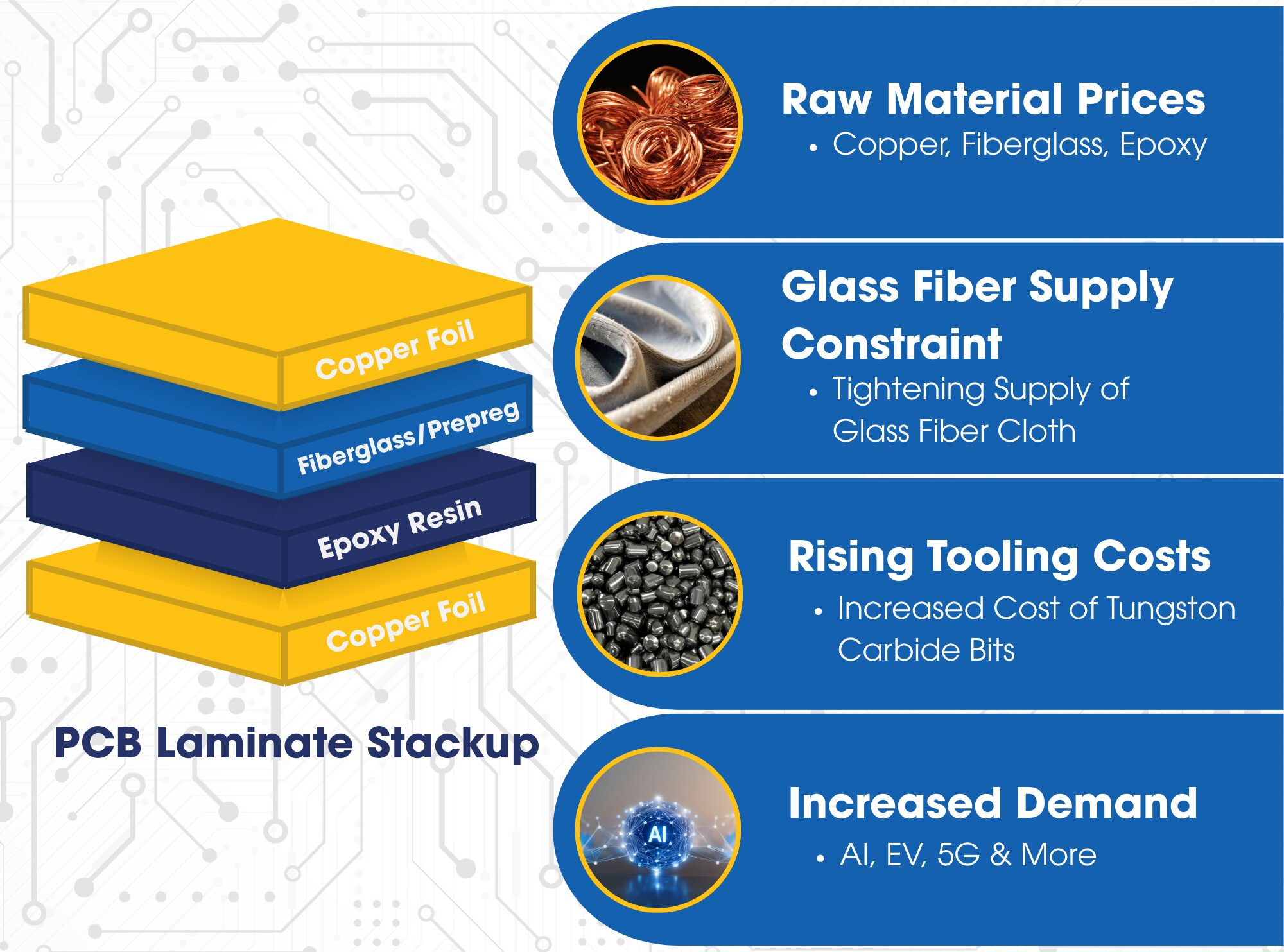
Demand across the electronics sector continues to remain strong, particularly in industries such as:
- Artificial intelligence infrastructure
- Electric vehicles
- Telecommunications and networking
- Industrial automation
- Consumer electronics
As these sectors grow, the demand for printed circuit boards — and the materials required to manufacture them — continues to rise.
Glass Fiber Supply Constraints
Another emerging concern in the PCB supply chain is the availability of glass fiber cloth, a key material used in many laminate systems.
In recent years, growing demand for advanced semiconductor packaging and high-performance substrates has shifted some production capacity toward higher-margin applications. When this happens, supply for standard PCB laminates can become tighter, which may contribute to pricing adjustments or longer lead times in certain cases.
For many PCB designs, fiberglass materials remain a foundational component of the stack-up structure.
Rising Tooling Costs
Beyond laminate materials, PCB fabrication also depends heavily on tungsten carbide tooling, which is used to produce drill bits and routing tools for PCB manufacturing.
Recent developments in the tungsten market — including export controls and reduced mining quotas — have contributed to significant increases in tungsten prices. Since tungsten carbide is widely used in precision manufacturing tools, these changes can indirectly affect PCB fabrication costs as tool replacement and wear costs increase.
Supply Chain Concentration
Another factor affecting the PCB ecosystem is the concentration of certain critical materials within specific regions of the world.
China plays a significant role in the global supply of several key industrial materials, including tungsten and certain PCB raw materials. When supply conditions tighten or policies change, those shifts can ripple through global manufacturing supply chains.
For electronics manufacturers, this reinforces the importance of working with partners who closely monitor global sourcing conditions.
Why This May Be More Than a Seasonal Pricing Event
Periodic material increases are not new in electronics manufacturing. What feels different right now is the number of categories moving at once: precious metals, copper-related inputs, fiberglass cloth, laminates, and tooling materials. The broader market evidence suggests that PCB manufacturers are dealing with a multi-variable supply challenge tied to export controls, capacity shifts, and persistent demand from advanced technologies. That combination is why many in the industry are viewing this less as a short-lived cycle and more as a structural issue that may continue to affect planning, sourcing, and pricing decisions.
Why These Trends Matter Across the Electronics Supply Chain
When multiple raw materials begin to move in price at the same time, PCB manufacturers must carefully balance cost, supply availability, and production scheduling.
While not every PCB project will be affected equally, these trends can lead to:
- Gradual adjustments in PCB pricing
- Longer lead times for certain laminate systems
- Increased variability in specialty material availability
- Greater importance of early design and sourcing discussions
For more complex boards — including high-layer count designs, high-frequency materials, or specialty laminates — these supply-chain factors may have a greater impact.
How MCL Helps Customers Navigate Market Changes
At Millennium Circuits Limited, our role goes beyond simply supplying printed circuit boards — we help customers navigate the technical and supply-chain complexities that affect PCB manufacturing. We work closely with our global manufacturing partners to stay informed about changes in raw material availability and pricing.
This allows us to help customers:
- Understand current PCB market conditions
- Evaluate material options early in the design process
- Anticipate potential supply-chain challenges
- Maintain production schedules with reliable sourcing strategies
By staying closely connected to both our customers and our manufacturing partners, we aim to provide the transparency and technical support needed to navigate changes in the electronics supply chain.
Staying Ahead of PCB Supply Chain Trends
Material fluctuations are a normal part of global electronics manufacturing. However, the current environment highlights how interconnected the PCB ecosystem has become — from metals and laminates to tooling materials and advanced packaging supply chains.
The key for electronics manufacturers is staying informed and planning ahead. If you have questions about laminate availability, material selection, or current market conditions, the team at Millennium Circuits Limited is always available to help.
At this time, manufacturers are still evaluating how—or if—this latest increase will be implemented. We expect additional clarity soon as suppliers finalize their positions.
We will continue to monitor developments closely and communicate proactively should any changes affect active or future programs.
For more information, contact the team at MCL today!
Summary
- PCB material costs are rising across the supply chain, driven by increased demand and constrained raw material availability.
- Fluctuations in copper, laminate, and specialty materials directly impact overall PCB pricing and lead times.
- Supply chain instability makes cost forecasting more difficult, requiring closer collaboration between customers and manufacturers.
- Material selection and design decisions can significantly influence final cost, especially in high-complexity builds.
- Proactive planning and early engagement with suppliers help mitigate cost and availability risks.